
How to Choose Forklift Lights for Your Work Area
By DXZ Lighting · Updated
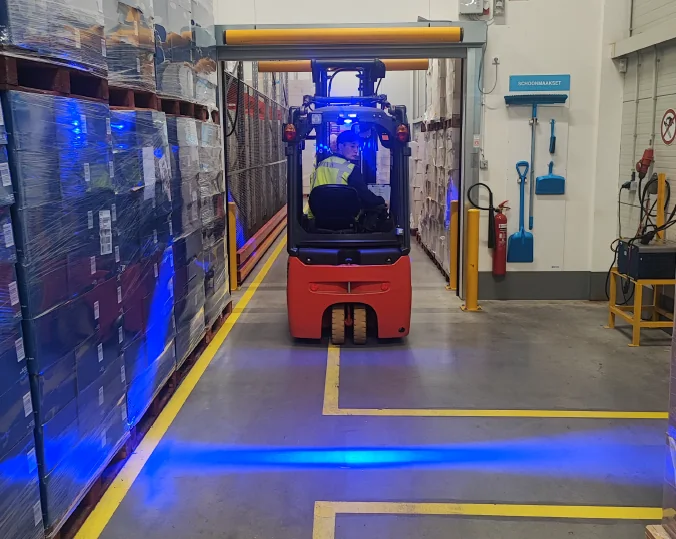
Choose forklift lights by the job: white work lighting for the surfaces the operator needs to see, and floor projection for a warning cue near the truck. Then match the lamp to the available mount, accessory supply and working conditions. A warehouse aisle, trailer interior and cold store can need different checks even when they use the same forklift.
Start with one specific problem, such as a pallet opening hidden in shadow or a truck approach that pedestrians cannot see. That description gives a supplier a useful selection task. The DXZ forklift light range includes work lights with an amber secondary element and red projection models for different floor patterns.
Which lighting function does the work area need?
A work light illuminates the task. A projection light places a spot, line or arc on the floor for people nearby to notice. If the operator cannot see the forks or load clearly, assess work-light coverage. If the issue is an obscured approach or a cue beside the truck, assess the projection pattern and where people will see it.
| Work area | First selection task | What the trial needs to show |
|---|---|---|
| Warehouse aisle or rack | Put white light on the handling surface; assess a separate cue for shared routes | Fork and pallet visibility with the normal load; a warning visible from the crossing approach |
| Loading dock or trailer | Coordinate truck-mounted work lighting with fixed dock or trailer lighting | Coverage of the handling area through the loading approach, without distracting reflections |
| Cold store | Match the lamp and installed connection to temperature transitions and cleaning | A usable view after transitions, with the specified temperature and protection documents |
| Outdoor yard | Cover the handling area and assess warning visibility in the available daylight | Task visibility after dark; the intended cue visible under the yard’s working conditions |
Use these questions to plan a sample trial and match the shortlisted lamp to the work area.
Warehouse aisles: check the load before choosing more output
View the pallet openings, fork tips and rack contact points from the operator’s seat. Repeat the check with the mast and load in the positions used for the job. Toyota’s lighting-options guide notes that the mast can obstruct inset headlights. If a structure blocks the beam, review the mounting position and aim before increasing output.
A flood-pattern lamp is a candidate for nearby task coverage. Compare the area it lights at the intended position, including the edges the operator needs to judge. For a shared aisle, assess a warning projection separately from that white beam. Observe it from the pedestrian approach, with the normal rack contents and facility lights in place.
Use the warehouse lighting checks to record those observations after installation. Detailed selection stays here; the warehouse checklist follows the fitted lamp through the actual route.
Loading docks: follow the beam into the trailer
Describe the trailer floor, load and approach that need lighting. Include the fixed lighting already available at the dock. A lamp that gives a useful view outside the trailer still needs a check from the driver’s seat inside it, through the load positions used during handling.
Repeat the trial at the loading approach and in the daylight conditions the operation uses. Record any dark task area and any reflection that interferes with the view. This identifies whether the next adjustment concerns the truck lamp, fixed lighting or both.
Lighting is one part of dock planning. OSHA’s loading-dock guidance addresses the dock edge, tail swing and clean working surfaces. Keep those operating controls in the loading procedure when selecting lamps.
Cold stores: specify the exposure in the inquiry
Include the minimum and maximum ambient temperatures, time spent in each area, warm-to-cold transitions and cleaning method. Ask for the selected model’s operating-temperature information and the protection evidence applicable to the supplied assembly, including its cable and connector.
The current DXZ product listings below state IP68. Use that as a starting specification to discuss the documented test conditions. For the water-exposure distinctions, see IP67, IP68 and IP69K for vehicle lighting. Temperature suitability and the intended washing method need their own confirmation.
In the trial, inspect the lens and the operator’s view after normal transitions. Record whether moisture or frost obscures the view, and whether the connection and lamp can be accessed for the site’s cleaning and maintenance routine.
Outdoor yards: check task coverage and daytime projection separately
For work after dark, identify the handling area and travel surfaces the operator needs to see. Review the view from the seat and the lamp’s position relative to nearby vehicle and pedestrian routes. The UK HSE workplace-transport lighting guidance calls attention to route lighting, clean covers and positioning that avoids dazzling drivers.
For a floor warning cue, run a separate daylight check on the yard surface. Record the floor condition, background light and approach direction. A product image on a dark surface cannot establish outdoor visibility for that installation.
Include rain, mud, washing and likely contact with obstacles when discussing the housing, bracket and connector. Include those exposure details in the electrical and mounting specification.
Which DXZ configurations should you compare?
The models below provide concrete starting points for a shortlist. The distinction is the lighting task and projection shape; a sample installation resolves the remaining fit and visibility questions.
| Model | Listed function or projected shape | Listed input | Selection question |
|---|---|---|---|
| 55C-FS-T5 | White flood work light with a separate amber element | 9–36 V DC | Does the twin-square light face cover the task from the available mount? |
| H-37FS-16 | White flood work light with an amber bar | 9–36 V DC | Does this 4-inch form fit the intended mounting position? |
| BX3-F1-A | Straight red floor line | 9–80 V DC | Does a line fit the planned cue beside the truck? |
| BX3-F1-B | Red arc from one projector | 9–80 V DC | Is the single-projector halo the suitable shape and housing arrangement? |
| BX4-T2 | Localized red floor marker from two projectors | 9–80 V DC | Does the route need a localized marker? |
| BX4-T2-B | Red arc from two projectors | 9–80 V DC | Does the dual-projector housing and arc orientation suit the mount? |
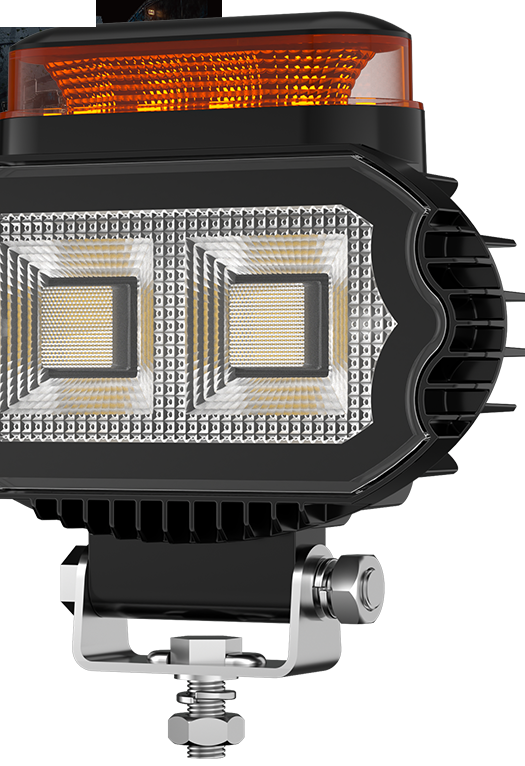
The 55C-FS-T5 has two square work-light modules and a separate amber strip. Its listed main beam is Flood. Specify the required switching behavior for the amber element along with the white work light.
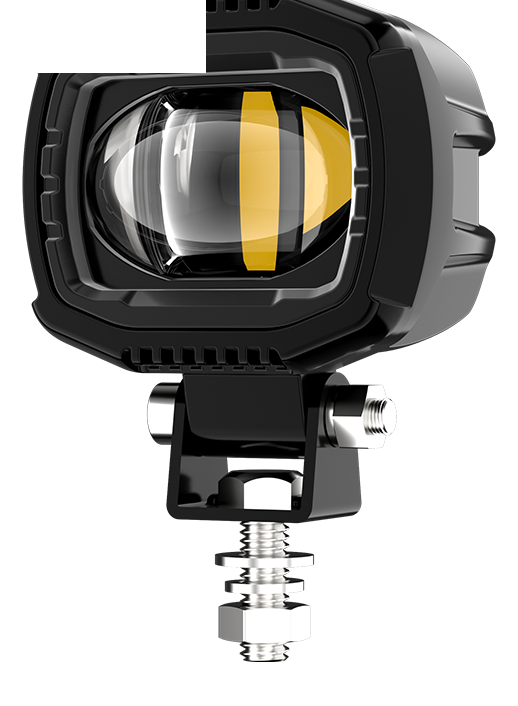
The BX3-F1-A has a single central projector and a straight red line as its floor cue. Choose its position around the site’s traffic plan and the available mounting adjustment.
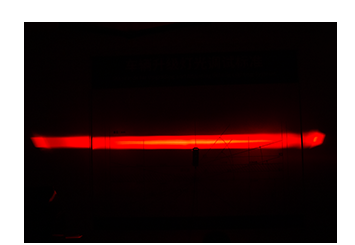
The BX3-F1-A product projection image shows the red line’s shape. The photograph does not state mounting height, distance or ambient light, so use a site trial to decide where that line should fall and whether it can be seen.
The product specifications use the field Theoretical Luminous Flux for the work lights. Keep that qualifier when comparing listings. For beam coverage, ask for the selected model’s photometric information and its measurement conditions. The DXZ goniophotometer guide explains the method; it is a method resource, rather than a test result for the models in this table.
What needs confirming before installation?
Match the lamp’s input range to the truck maker’s approved accessory supply. Include the current draw, connector pinout, cable route and control method in the installation review. A listed upper input limit needs to be compared with the actual supply conditions, including charging and transients, before choosing the connection.
Ask for the housing and mounting drawing. Package dimensions describe the package; use the lamp and bracket dimensions to assess fit. Include room for aiming, fasteners, connector access and the mast or attachment movement.
For US operating areas, 29 CFR 1910.178(h)(2) requires auxiliary directional lighting on the truck when general lighting is below 2 lumens per square foot. Assess that work-light requirement separately from floor warning cues.
What should you send for a forklift lighting quotation?
Send a short description of the problem and the installation:
- Identify the truck make and model and the approved accessory supply.
- Describe the surface to illuminate or the warning cue needed, including the viewing direction.
- Give the proposed mount, available space and bracket requirements; include a photo or sketch.
- State the operating temperatures, cleaning method and indoor or outdoor conditions.
- List the required connector, switching behavior, quantity and model-specific documents.
Compare the forklift configurations, then send the work-area details to DXZ. For a changed bracket, connector or lamp assembly, the OEM and ODM service provides the relevant inquiry route.
Download forklift-light documents
- FCC Supplier’s Declaration of Conformity, February 2, 2026 (PDF)
- CE-EMC Certificate of Conformity, November 16, 2022 (PDF)
- RoHS Certificate of Conformity, November 16, 2022 (PDF)
The PDFs include their issue dates and model lists. Contact DXZ with the SKU and destination market for the latest model-specific documents.